
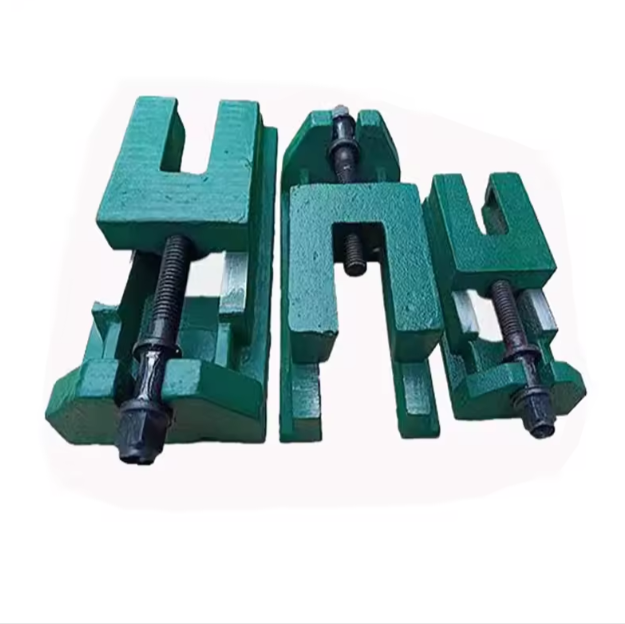
toughened glass window
What shops get wrong (and right) about the surface plate in 2025 I’ve walked into too many metrology rooms where the granite looks spotless, the height gage is shiny—and the fixturing is improvisational at best. The unsung hero? Cast Iron Angle Plates. They’re the missing link between your reference surface plate and real-world setups for squareness checks, parallelism, and jigging. Sounds basic, but in practice it’s where many shops quietly lose microns (and money). Industry snapshot Shift toward shop-floor metrology—granite surface plate use now extends beyond labs with better environmental controls and covers. Hybrid setups: granite + cast iron angle plates for damping + rigidity. It seems that combo is winning on repeatability. More audits: ISO 9001 customers and PPAP require traceable flatness/squareness certificates from accredited labs. Customization demand up—T-slots, webbing, and stress relief are no longer “nice to have.” Product focus: Cast Iron Angle Plates for your surface plate From STR Machinery (Origin: No.17, Building 11, Hardware Building Material City, Botou, Cangzhou City, Hebei Province, China), these angle plates are used to build fixtures and verify squareness/parallelism. All machined faces are square and parallel—actually checked against standards like DIN 875 and DIN 876. Specs at a glance Material High‑grade cast iron (HT200/HT300), pearlitic matrix, ≈180–240 HB Standard Sizes (examples) 200×150×150 mm; 300×200×200 mm; 500×300×300 mm; customs available Flatness (each face) Up to Grade 1 per DIN 876: ≈6–10 μm/300 mm (real‑world use may vary) Squareness ≈6–12 μm/300 mm per DIN 875/GB/T standards Features Aged stress relief, ribbed webbing, hand‑scraped finish, optional T‑slots / slots Certificates Material cert, inspection report; calibration traceable to ISO 17025 (by request) Process flow (why it matters) Casting → rough machining → thermal/aging stress relief → semi‑finish → final machining → hand scraping → inspection (DIN 875/876) → packaging. Testing uses granite surface plate , autocollimator, precision squares, and temperature control at 20±1°C. Service life? Around 5–10 years with normal shop use, longer if you baby it—cleaning, rust prevention, and no hammering (yes, I’ve seen it). Where they shine Squareness checks on a surface plate for prismatic parts, mold bases, and fixtures. Parallelism verification with gauge blocks and dial indicators. Jig building for light machining ops and CMM staging (carefully). Aerospace, automotive, medical device, and die/mold shops, mostly. Many customers say the damping and rigidity combo beats makeshift setups. Surprisingly, even simple T‑slotted patterns cut setup time by ~20–30%. Vendor comparison (indicative) Vendor Origin Standards Customization Lead Time Price STR Machinery Botou, Cangzhou, China DIN 875/876, ISO‑traceable reports High (slots, size, webbing) ≈15–35 days Value Vendor B EU DIN/ISO Medium ≈30–45 days Premium Mini case study An automotive fixture team in Pune added T‑slotted cast iron angle plates to their 1200×900 granite surface plate . Setup repeatability improved from 22 μm to 9 μm (10‑part study, 20°C). They reported a 28% reduction in first‑article time and fewer NCRs. Not magic—just stable fixturing and proper stress‑relieved castings. Care tips Keep both the angle plate and surface plate clean; use lint‑free wipes and light oil on cast iron after use. Store vertically on wood blocks to avoid twist. Re‑calibrate yearly (or sooner if moved). Avoid impact loads; use torque‑controlled clamps. Citations: DIN 876: Flatness tolerances for cast iron and granite surface plates. ASME B89.3.7: Granite surface plates—Test and acceptance (latest edition). ISO 8512: Surface plates—Part 1/2 specifications and verification.
about
toughened glass window
Understanding Thread Plug Gauges and the JIS Standard In the world of manufacturing and mechanical engineering, precise dimensions and tolerances are critical to the functionality and interoperability of machine parts. One of the essential tools used for ensuring the accuracy of threaded components is the thread plug gauge. This article will explore thread plug gauges and their alignment with the Japan Industrial Standards (JIS), shedding light on their significance, usage, and the standards that govern them. What is a Thread Plug Gauge? A thread plug gauge is a specialized measuring tool used to verify the dimensions of internal threads in various components. Its primary purpose is to assess whether the internal threads meet specified tolerances and standards. The gauge typically features a tapered or straight design with threads that match the size and profile of the intended internal thread being measured. Thread plug gauges come in two main types Go and No-Go gauges. The Go gauge should fit inside the threaded hole if the threads are within specification, while the No-Go gauge should not fit if the dimensions are accurate. This simple pass/fail mechanism streamlines the quality control process, ensuring that components will fit together correctly in assembly. JIS Standards for Thread Plug Gauges The Japan Industrial Standards (JIS) play a significant role in the manufacturing and engineering industries in Japan and beyond. These standards are developed and maintained by the Japanese Industrial Standards Committee, which coordinates efforts to ensure that products meet safety, quality, and compatibility requirements. JIS standards for thread plug gauges encompass various aspects, including dimensions, tolerances, and material specifications. The application of these standards helps manufacturers ensure that their components conform to a recognized framework, promoting quality and reliability. Key JIS standards related to thread plug gauges include 1. JIS B 0202 This standard specifies the general requirements for measuring gauges, including thread plug gauges. It covers material, finish, and other essential characteristics that gauges must meet to be considered conforming. thread plug gauge jis standard 2. JIS B 0205 This standard outlines the specifications for the dimensions of gauge threads, detailing the actual sizes and tolerances for various thread types, which are crucial for the production of accurate thread plug gauges. 3. JIS B 0201 This provides a framework for the verification and calibration of measurement tools, ensuring that thread plug gauges remain accurate over time and with use. Importance of Adhering to JIS Standards Adhering to JIS standards is vital for several reasons - Quality Assurance Following these standards helps manufacturers maintain high-quality production processes. It ensures that all components are made to precise specifications, thereby reducing the risk of failure in applications. - Interchangeability By conforming to established standards, components produced by different manufacturers can fit and function together. This concept of interchangeability is crucial in global supply chains where parts from various suppliers are combined. - Market Competitiveness Compliance with JIS standards often becomes a prerequisite for doing business in Japan and with Japanese companies. Adhering to these standards enhances a manufacturer's reputation and competitiveness in the market. Conclusion Thread plug gauges are indispensable tools in modern manufacturing, facilitating the measurement of internal thread dimensions to ensure precision and compatibility. The alignment of these gauges with JIS standards not only improves product quality but also supports the global acceptance of components designed and produced in Japan. As industries continue to evolve and demand greater accuracy and efficiency, the relevance of thread plug gauges and the standards that govern them will undoubtedly increase, underscoring the importance of quality control in engineering and production practices. Whether you are a manufacturer, engineer, or quality assurance professional, understanding the relationship between thread plug gauges and JIS standards is essential for success in today's competitive landscape.
-

High quality industrial productsagement

High quality industrial products
View Details -

Meet the diverse needs of customers

Meet the diverse needs of customers
View Details -

Strict quality control

Strict quality control
View Details -

Top raw materials

Top raw materials
View Details -

Trusted supplier

Trusted supplier
View Details
Our application


news and information
Welding Inspection Tools for Accurate Measurement and Quality Assurance
The Importance of Welding Inspection Rulers in Quality Control Welding is a critical process in vari
Verstellbarer Erdanker – Optimale Stabilität für Ihr Bauprojekt
Verstellbare Bodenanker Eine innovative Lösung für zahlreiche Anwendungen Verstellbare Bodenanker si
Water Strainer for Efficient Filtration and Reliable Performance in Various Applications
Understanding the Y-Type Water Strainer A Key Component in Fluid Systems In industrial and municipal
 English